


Salsa de mango y chile picante
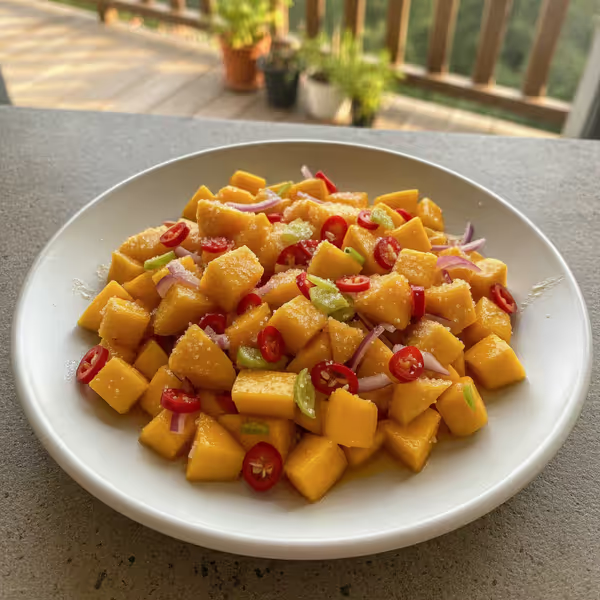
Esta salsa de mango y chile combina el dulzor afrutado con un toque picante en un dúo irresistible. La cebolla y el chile, rehogados y luego enfriados, adquieren un sabor suave y redondo que combina de maravilla con el mango jugoso. Un chorrito de lima le da el punto fresco final. Como dip, guarnición o topping, esta salsa le sienta bien a casi todo.
Ingredientes
- 1 chile rojo (guindilla), puedes usar chile fresco tipo cayena o el que encuentres en tu frutería
- 2 cebollas
- 4 cda. aceite, aceite de oliva suave o de girasol
- 2 mangos
- 2 cdta. azúcar
- 2 cda. zumo de lima
The ingredient amounts above scale with your choice. The value per serving stays the same, while the total in the pot grows with the number of servings.
All nutrition values side by side
| Nutrient | por ración (estimación) | Total for 4 Raciones |
|---|---|---|
| Calorías | 165 kcal | 660 kcal |
| Carbohidratos | 16 g | 64 g |
| Proteínas | 1 g | 4 g |
| Grasas | 11 g | 44 g |
| Fibra | 2 g | 8 g |
| de los cuales azúcares | 13 g | 52 g |
How this is calculated
Target amount = ingredient amount × target servings ÷ base servings. The result is then rounded for kitchen use: from 100 g or ml to the nearest 5, between 1 and 99 to the nearest 1, pieces and spoons to half units, amounts below one unit to quarters, thirds or halves. Teaspoons and tablespoons also go down to an eighth, kilograms and litres stay finer.
Total = value per serving × target servings. The value per serving is unchanged, because ingredient amount and serving count change by the same factor.
Sources
- Regulation (EU) No 1169/2011 (FIC), Art. 32 and 33: nutrition values per 100 g or 100 ml, additionally allowed per portion.
- European Commission, Guidance document for competent authorities for the control of compliance with EU food law, setting of tolerances for nutrient values declared on a label, December 2012.
Nutrition values are estimates from the recipe record, not laboratory results. Even for checked labels the EU sets tolerances: for fat, protein and carbohydrates 20 percent in the range of 10 to 40 g per 100 g, and 2 g per 100 g below that. Home cooking varies more, because variety, size and cooking loss of the ingredients differ. Kitchen rounding also shifts the total slightly against the plain rule of three. Anyone who has to keep amounts exact for medical reasons, for example during a nutrition therapy prescribed by a doctor, should discuss them with a doctor or a registered dietitian. Your serving count is calculated in your browser only, it is neither stored nor transmitted.
Elaboración
- Retira las semillas del chile y pícalo bien fino. Corta las cebollas en dados pequeños.
- Calienta el aceite en una sartén y rehoga el chile y la cebolla a fuego medio. Deja que la mezcla se enfríe por completo antes de seguir.
- Pela los mangos, separa la pulpa del hueso y córtala en dados pequeños.
- Mezcla la cebolla y el chile ya fríos con los dados de mango, el azúcar y el zumo de lima. Remueve bien y sirve.
¿Ya lo cocinaste? Cuéntanos qué tal salió.
¿Te ha gustado? Valora la receta
Valores nutricionales por ración (estimación)
| Calorías | 165 kcal |
|---|---|
| Carbohidratos | 16 g |
| Proteínas | 1 g |
| Grasas | 11 g |
| Fibra | 2 g |
| de los cuales azúcares | 13 g |
Preguntas frecuentes
¿Cómo puedo controlar el picante de la salsa?
Es fácil ajustarlo a tu gusto: si prefieres un sabor más suave, retira bien todas las semillas y las membranas blancas del chile. Si quieres más fuerza, añade un segundo chile.
¿Con qué combina mejor la salsa de mango y chile?
Queda estupenda con carne o pescado a la parrilla, con tacos, o simplemente como dip con nachos o totopos.
¿Puedo preparar la salsa con antelación y guardarla?
Sí, puedes guardarla tapada en la nevera hasta dos días. De hecho, reposar unas horas ayuda a que los sabores se intensifiquen.