


Abadejo sobre verduras al horno
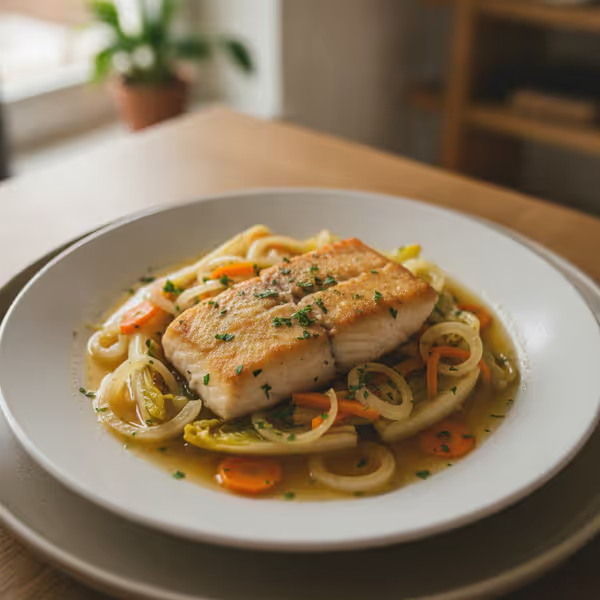
Abadejo tierno sobre una cama de endibia, cebolla y zanahoria: este plato de horno tan sencillo apenas necesita ingredientes y está listo en poco menos de 30 minutos. El zumo de limón le da un toque fresco, mientras que la verdura se cuece en su propio jugo y queda bien tierna. Perfecto para quienes buscan una cena ligera y baja en carbohidratos después de un día largo.
Ingredientes
- 150 g endibia
- 1 cebolla
- 50 g zanahoria
- 1 cda. zumo de limón, recién exprimido
- 150 g filete de abadejo
- 2 cda. caldo de verduras, en pasta o en polvo, sin aditivos; se encuentra en herbolarios o tiendas de productos naturales
- sal y pimienta, al gusto
The ingredient amounts above scale with your choice. The value per serving stays the same, while the total in the pot grows with the number of servings.
All nutrition values side by side
| Nutrient | por ración (estimación) | Total for 1 Raciones |
|---|---|---|
| Calorías | 190 kcal | 190 kcal |
| Carbohidratos | 10 g | 10 g |
| Proteínas | 32 g | 32 g |
| Grasas | 3 g | 3 g |
| Fibra | 4 g | 4 g |
| de los cuales azúcares | 6 g | 6 g |
How this is calculated
Target amount = ingredient amount × target servings ÷ base servings. The result is then rounded for kitchen use: from 100 g or ml to the nearest 5, between 1 and 99 to the nearest 1, pieces and spoons to half units, amounts below one unit to quarters, thirds or halves. Teaspoons and tablespoons also go down to an eighth, kilograms and litres stay finer.
Total = value per serving × target servings. The value per serving is unchanged, because ingredient amount and serving count change by the same factor.
Sources
- Regulation (EU) No 1169/2011 (FIC), Art. 32 and 33: nutrition values per 100 g or 100 ml, additionally allowed per portion.
- European Commission, Guidance document for competent authorities for the control of compliance with EU food law, setting of tolerances for nutrient values declared on a label, December 2012.
Nutrition values are estimates from the recipe record, not laboratory results. Even for checked labels the EU sets tolerances: for fat, protein and carbohydrates 20 percent in the range of 10 to 40 g per 100 g, and 2 g per 100 g below that. Home cooking varies more, because variety, size and cooking loss of the ingredients differ. Kitchen rounding also shifts the total slightly against the plain rule of three. Anyone who has to keep amounts exact for medical reasons, for example during a nutrition therapy prescribed by a doctor, should discuss them with a doctor or a registered dietitian. Your serving count is calculated in your browser only, it is neither stored nor transmitted.
Elaboración
- Precalienta el horno a 170 °C con ventilador (aire caliente).
- Lava y limpia la endibia, retira la parte amarga de la base y córtala en tiras finas.
- Corta la cebolla y la zanahoria en dados pequeños.
- Mezcla toda la verdura con sal, pimienta y parte del zumo de limón. Reserva el resto del zumo para el pescado. Pon la verdura, junto con las 2 cda. de caldo de verduras, en una fuente de horno.
- Rocía el filete de abadejo con el zumo de limón restante y sazona ligeramente con sal y pimienta.
- Coloca el abadejo encima de la cama de verduras y hornea la fuente unos 25 minutos en el horno precalentado.
¿Ya lo cocinaste? Cuéntanos qué tal salió.
¿Te ha gustado? Valora la receta
Valores nutricionales por ración (estimación)
| Calorías | 190 kcal |
|---|---|
| Carbohidratos | 10 g |
| Proteínas | 32 g |
| Grasas | 3 g |
| Fibra | 4 g |
| de los cuales azúcares | 6 g |
Preguntas frecuentes
¿Puedo sustituir la endibia por otra verdura?
Sí, el hinojo o el calabacín también funcionan bien y tienen un tiempo de cocción similar.
¿Qué caldo de verduras es el más adecuado?
Lo ideal es usar una pasta o un polvo sin aditivos, de herbolario o tienda de productos naturales.
¿Puedo multiplicar las cantidades para varias raciones?
Sí, todos los ingredientes se pueden multiplicar sin problema. Usa entonces una fuente de horno más grande.
¿Es apto para una dieta baja en carbohidratos o LOGI?
Sí, la receta es baja en carbohidratos, rica en proteína y sin gluten, por lo que combina muy bien con dietas bajas en carbohidratos y el método LOGI.