


Sopa de coliflor con pollo
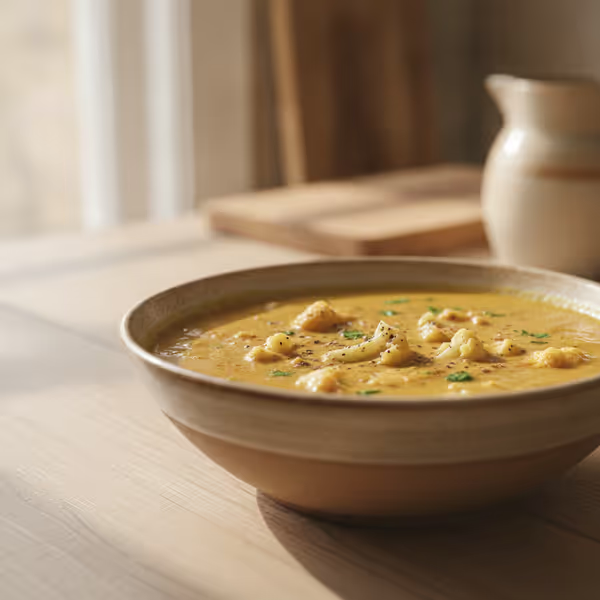
Esta cremosa sopa de coliflor con tiernas tiras de pechuga de pollo se prepara en un momento, reconforta y es ligera a la vez. El curry le aporta un toque especiado, mientras que la nuez moscada suma un fondo aromático muy agradable. Ideal para quien busca un plato saciante y bajo en carbohidratos sin complicarse en la cocina. Además, es una receta sin gluten y rica en proteína.
Ingredientes
- 250 g coliflor
- 0,5 l caldo de verduras
- curry, al gusto
- nuez moscada, al gusto
- pimienta, al gusto
- sal, al gusto
- 100 g pechuga de pollo en tiras, cocida
The ingredient amounts above scale with your choice. The value per serving stays the same, while the total in the pot grows with the number of servings.
All nutrition values side by side
| Nutrient | por ración (estimación) | Total for 1 Raciones |
|---|---|---|
| Calorías | 185 kcal | 185 kcal |
| Carbohidratos | 10 g | 10 g |
| Proteínas | 24 g | 24 g |
| Grasas | 4 g | 4 g |
| Fibra | 4 g | 4 g |
| de los cuales azúcares | 5 g | 5 g |
How this is calculated
Target amount = ingredient amount × target servings ÷ base servings. The result is then rounded for kitchen use: from 100 g or ml to the nearest 5, between 1 and 99 to the nearest 1, pieces and spoons to half units, amounts below one unit to quarters, thirds or halves. Teaspoons and tablespoons also go down to an eighth, kilograms and litres stay finer.
Total = value per serving × target servings. The value per serving is unchanged, because ingredient amount and serving count change by the same factor.
Sources
- Regulation (EU) No 1169/2011 (FIC), Art. 32 and 33: nutrition values per 100 g or 100 ml, additionally allowed per portion.
- European Commission, Guidance document for competent authorities for the control of compliance with EU food law, setting of tolerances for nutrient values declared on a label, December 2012.
Nutrition values are estimates from the recipe record, not laboratory results. Even for checked labels the EU sets tolerances: for fat, protein and carbohydrates 20 percent in the range of 10 to 40 g per 100 g, and 2 g per 100 g below that. Home cooking varies more, because variety, size and cooking loss of the ingredients differ. Kitchen rounding also shifts the total slightly against the plain rule of three. Anyone who has to keep amounts exact for medical reasons, for example during a nutrition therapy prescribed by a doctor, should discuss them with a doctor or a registered dietitian. Your serving count is calculated in your browser only, it is neither stored nor transmitted.
Elaboración
- Lava la coliflor, límpiala y córtala en ramilletes.
- Cuece los ramilletes de coliflor con el caldo de verduras en una olla hasta que estén tiernos.
- Tritura bien la sopa con la batidora y salpimenta al gusto con curry, nuez moscada, pimienta y sal.
- Añade las tiras de pechuga de pollo cocida y cortadas en trozos pequeños, y calienta todo junto hasta que la sopa esté bien caliente y lista para servir.
¿Ya lo cocinaste? Cuéntanos qué tal salió.
¿Te ha gustado? Valora la receta
Valores nutricionales por ración (estimación)
| Calorías | 185 kcal |
|---|---|
| Carbohidratos | 10 g |
| Proteínas | 24 g |
| Grasas | 4 g |
| Fibra | 4 g |
| de los cuales azúcares | 5 g |
Preguntas frecuentes
¿Esta sopa de coliflor es realmente baja en carbohidratos?
Sí, la coliflor tiene muy pocos carbohidratos y la sopa no lleva ni patata ni harina, por lo que encaja bien en dietas bajas en carbohidratos.
¿Puedo prepararla sin pechuga de pollo?
Claro, sin el pollo la sopa queda vegetariana e incluso vegana. En ese caso, asegúrate de usar un caldo de verduras apto para veganos.
¿Cuánto se conserva la sopa?
En la nevera, bien tapada, se mantiene en buen estado unos 2-3 días. También se puede congelar sin problema.
¿Puedo usar coliflor congelada?
Sí, la coliflor congelada funciona igual de bien. Puedes añadirla directamente al caldo sin descongelarla antes.